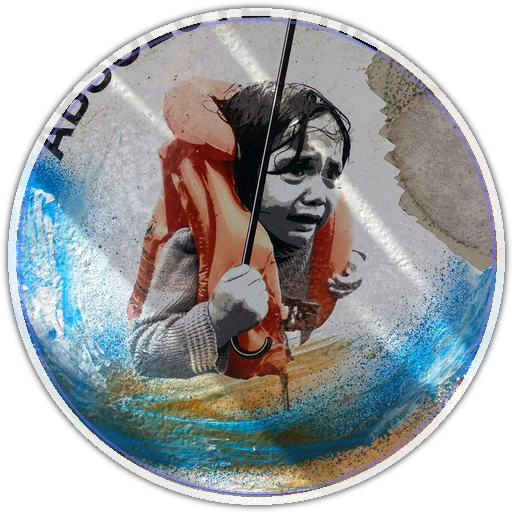
Why humanitarian AI feels personal.
Edge-Triage is not only a technical demo. It comes from a belief shaped by lived experience: in crisis situations, the best technology is the kind that respects responders, works when infrastructure is weak, and helps people make clearer decisions under pressure.
Built by someone who has seen what fragile systems feel like.
The builder of Edge-Triage has lived with displacement from a very young age and spent years close to war-area realities, where ordinary systems can break quickly and information can become fragmented, delayed, or hard to trust. That background makes disaster response feel less abstract: when connectivity is weak and people are overwhelmed, small improvements in routing, clarity, and timing can matter.
Later, through Data and AI work with an NGO supporting other NGOs pro-bono, the same lesson kept appearing in a different form. Many humanitarian teams do not need flashy AI. They need practical tools that respect their workflows, protect sensitive information, explain their outputs, and help them make better use of limited data and limited time.
Gemma 4 is useful for this kind of work because it can bring modern multimodal reasoning closer to the field. A local-first model path means reports and photos can stay near the incident, volunteer workflows can keep working when the cloud is unreliable, and improvement loops can still be measured against transparent evidence instead of vague promises.
Edge-Triage is a small prototype in that direction: conservative, auditable decision support for people already doing the hard work. The goal is not to automate compassion or command. The goal is to give humanitarian teams one more reliable tool when every minute and every clear signal matters.